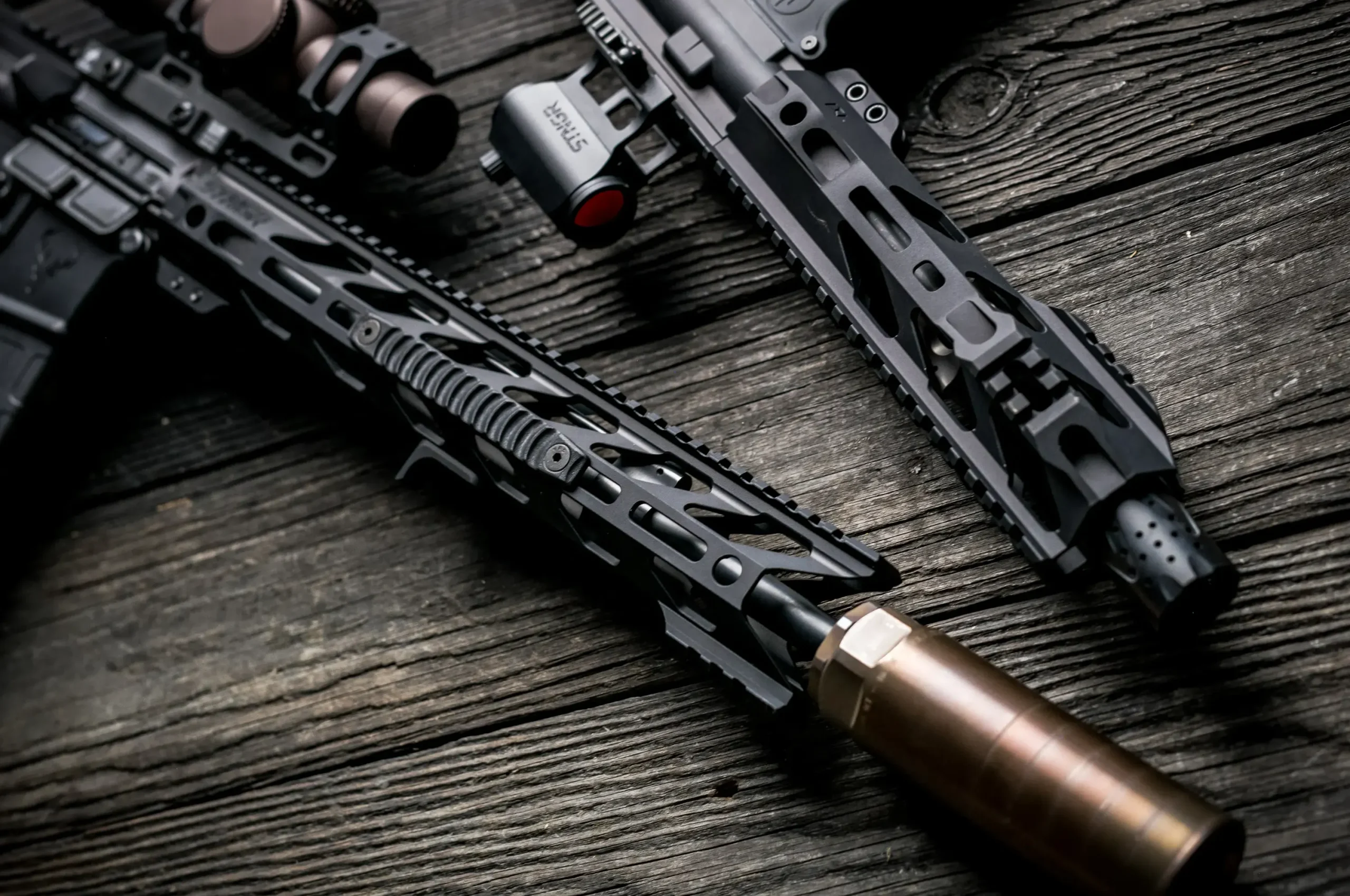
The AR15 platform is renowned for its modularity, allowing enthusiasts to customize nearly every component to suit their specific needs and preferences. Among the most critical yet often overlooked components is the handguard. Far more than just a place to grip your rifle, the right AR15 handguard can significantly impact your firearm’s accuracy, comfort, and overall aesthetics. Whether you’re a competitive shooter, a hunter, or simply a firearm enthusiast, understanding the nuances of handguard selection is paramount to unlocking your AR15’s full potential.
Contents
The Foundation: Understanding Handguard Types
Before diving into the specifics, it’s essential to differentiate between the primary types of handguards available on the market. Each offers distinct advantages and disadvantages.
Drop-In Handguards
These are typically the most basic and often come standard on entry-level AR15s. Drop-in handguards are usually two-piece designs that secure around the barrel nut and gas tube. They are incredibly easy to install, requiring no special tools, and are generally the most affordable option. However, their primary drawback is limited accessory mounting options and a tendency to heat up quickly due to direct contact with the barrel.
Free-Float Handguards
The gold standard for serious shooters, free-float handguards attach directly to the upper receiver’s barrel nut, without touching the barrel itself. This design prevents any pressure or torque from your grip or accessories from influencing the barrel’s harmonics, leading to improved accuracy. While more complex to install and generally more expensive, the benefits in precision are undeniable. A study by the National Shooting Sports Foundation (NSSF) highlighted that rifles equipped with free-float handguards consistently demonstrated tighter groupings compared to those with drop-in variants in controlled testing environments.
Key Factors to Consider When Selecting Your AR15 Handguard
Once you understand the basic types, you can delve into the critical features that will guide your decision.
1. Length and Ergonomics: Comfort and Control
The length of your AR15 handguard is a crucial ergonomic consideration. Longer handguards offer several advantages:
- Extended Grip: They allow for a more forward grip, which can improve stability and control, especially during rapid fire or target transitions.
- Accessory Real Estate: More length means more space for lights, lasers, foregrips, and other accessories without crowding your hand.
- Heat Dissipation: A longer handguard, especially a free-float one, can help dissipate heat more effectively, protecting your hands from a hot barrel.
Conversely, shorter handguards can make a rifle more compact and maneuverable, which might be preferred for close-quarters applications. Consider your shooting style and the primary use of your rifle when deciding on length. A common choice for a general-purpose AR15 is a handguard that extends almost to the muzzle device, typically 13-15 inches for a 16-inch barrel.
2. Mounting Systems: Versatility and Customization
Modern AR15 handguards offer various mounting systems for accessories. The choice here largely depends on the types of accessories you plan to use.
- Picatinny Rails (MIL-STD-1913): The classic and most widely recognized system. Picatinny rails provide robust attachment points but can add significant bulk and weight if present on all sides. Many modern handguards feature Picatinny sections only where needed, or as modular attachments.
- M-LOK (Modular Lock): Developed by Magpul, M-LOK is a direct-attachment system that uses slots for accessories. It’s lighter, sleeker, and generally more comfortable to grip than a quad-rail Picatinny system. It has quickly become one of the most popular choices due to its versatility and low profile.
- KeyMod: Another direct-attachment system, KeyMod offers similar benefits to M-LOK in terms of weight reduction and ergonomics. While still available, M-LOK has largely surpassed KeyMod in popularity and industry adoption.
When choosing, consider the accessories you already own or plan to purchase. Adapters are available for cross-compatibility, but direct attachment systems like M-LOK are often preferred for their streamlined design.
3. Material and Weight: Durability vs. Maneuverability
The material of your AR15 handguard directly impacts its weight, durability, and heat management properties.
- Aluminum: The most common material, typically 6061-T6 or 7075-T6 aluminum, known for its excellent strength-to-weight ratio and ability to dissipate heat. Most high-quality free-float handguards are made from aluminum.
- Carbon Fiber: Increasingly popular in high-end applications, carbon fiber handguards are exceptionally lightweight and offer superior heat resistance. However, they are generally more expensive and can be less resistant to extreme impact compared to aluminum.
- Polymer: Primarily found in drop-in handguards, polymer is lightweight and affordable but offers less rigidity and heat resistance than metal options.
For a general-purpose or duty rifle, an aluminum free-float handguard strikes an excellent balance. For competitive shooters looking to shave every possible ounce, carbon fiber might be worth the investment.
4. Aesthetics and Style: Personalizing Your Rifle
While performance is paramount, the look of your AR15 also matters. Handguards come in a vast array of designs, profiles, and finishes. Some offer a minimalist, slim profile, while others might have more aggressive lines or integrated features. Consider how the handguard’s appearance will complement the rest of your rifle’s build. After all, a custom AR15 is an extension of your personality.
Actionable Tips for Selection
- Define Your Purpose: Are you building a lightweight competition rifle, a rugged duty carbine, or a precision long-range shooter? Your primary use case will heavily influence your choices.
- Measure Twice, Buy Once: Double-check barrel nut compatibility, especially with free-float handguards. Ensure the length you choose clears your gas block and muzzle device.
- Read Reviews: Leverage the experiences of other shooters. Online forums and product reviews can provide invaluable insights into real-world performance and potential issues.
Consider Future Upgrades: Choose a mounting system that offers flexibility for future accessory additions. M-LOK is an excellent choice for this.
Conclusion
The AR15 handguard is more than just a protective sleeve; it’s a critical interface that connects you to your rifle. By carefully considering factors like type, length, mounting system, and material, you can select a handguard that not only enhances your rifle’s accuracy and comfort but also perfectly aligns with your individual shooting style and aesthetic preferences. Investing time in this decision will undoubtedly elevate your shooting experience and unlock new levels of performance from your AR15.
—
Author Bio:
This author is a seasoned firearms enthusiast and experienced builder with over a decade of hands-on experience customizing and optimizing AR-platform rifles. With a passion for precision engineering and ergonomic design, they have extensively researched and tested various components to achieve peak performance and user satisfaction. Their insights are rooted in practical application and a deep understanding of firearm mechanics, aiming to empower fellow enthusiasts with the knowledge to make informed decisions for their builds.
Read Also:- shapewear
